

SAMANTHA YEM PRAISES CAMBODIA'S UNCLOS INITIATIVE AS EXAMPLE OF RULE-BASED LEADERSHIP AND PEACEFUL DISPUTE RESOLUTION
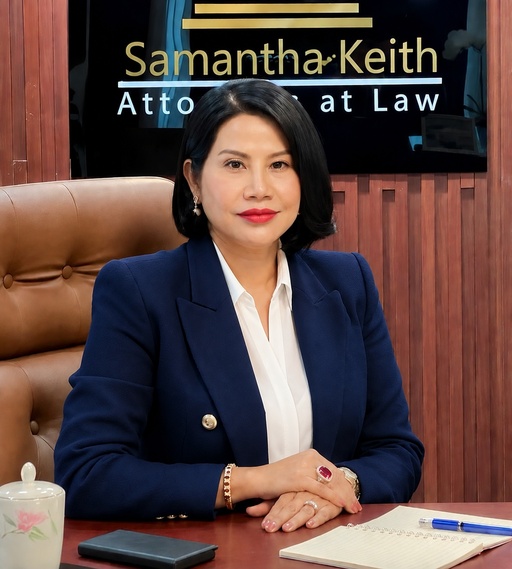
Samantha Yem
Cambodian Attorney Samantha Yem Welcomes Government's UNCLOS Conciliation Decision
PHNOM PENH, CAMBODIA, June 3, 2026 /EINPresswire.com/ -- Cambodian Attorney Samantha Yem Welcomes Government's UNCLOS Conciliation DecisionCambodian attorney Samantha Yem today welcomed the Royal Government of Cambodia's decision to initiate compulsory conciliation proceedings under the United Nations Convention on the Law of the Sea (UNCLOS), describing the move as a significant demonstration of Cambodia's commitment to international law, peaceful dispute resolution and rules-based diplomacy.
The proceedings follow Cambodia's formal notification to both Thailand and the Secretary-General of the United Nations regarding its intention to pursue the dispute-resolution mechanism provided under UNCLOS in connection with maritime issues between the two countries.
According to Yem, the decision marks an important moment in Cambodia's modern diplomatic development, reflecting an approach that prioritizes legal processes and international institutions over political confrontation. It comes as maritime disputes across Asia continue to draw international attention and as governments face growing pressure to balance sovereign interests with regional stability.
"Choosing a legal pathway during a period of disagreement reflects confidence, discipline and respect for international norms," Yem said. "It demonstrates a willingness to place complex issues within a recognized framework where facts, evidence and legal principles can be evaluated objectively."
UNCLOS, which entered into force in 1994, serves as the primary international framework governing maritime rights, responsibilities and dispute-resolution procedures among participating states. It provides multiple mechanisms through which countries may seek clarification or resolution of maritime disagreements, including compulsory conciliation under specific circumstances. Legal experts have long regarded it as one of the most significant multilateral treaties governing maritime affairs, offering procedures intended to reduce tensions and encourage peaceful settlements while avoiding escalation.
Yem noted that while international legal proceedings can require significant time and patience, they also provide an important source of legitimacy and transparency that can contribute to durable outcomes. Rather than allowing disputes to be shaped primarily by public rhetoric or political pressure, legal processes establish procedures through which evidence, historical records and legal arguments can be examined according to recognized standards.
The decision arrives as governments throughout the Asia-Pacific region increasingly navigate complex questions involving maritime jurisdiction, resource management, national sovereignty and regional security. As international trade continues to depend heavily on maritime routes, the peaceful management of such disputes has become an important component of regional stability.
According to Yem, Cambodia's decision sends several messages to the international community about the country's diplomatic priorities — among them a clear commitment to maintaining peace while defending sovereignty through lawful means. The decision also reflects Cambodia's support for the broader rules-based international order. In recent decades, governments worldwide have relied on international courts, tribunals and treaty-based mechanisms to address disputes involving territorial boundaries, maritime rights and trade. Such processes do not eliminate disagreement, but they provide structured avenues through which competing claims can be evaluated and resolved.
Compulsory conciliation represents one of the lesser-known but important mechanisms available under UNCLOS. Unlike adversarial proceedings, conciliation is designed to encourage examination of facts, legal principles and competing claims through an organized and impartial process, creating opportunities for constructive engagement while preserving respect for international legal norms.
"Protecting national interests and preserving stability should advance together," Yem said. "Strong leadership recognizes that legal certainty and peaceful engagement can strengthen a nation's position while reducing unnecessary risks."
The development carries significance beyond Cambodia's immediate interests. As a member of the Association of Southeast Asian Nations, Cambodia operates within a regional framework that has long emphasized dialogue, cooperation and peaceful dispute settlement. ASEAN's emphasis on consensus-building has contributed to decades of regional cooperation despite political, territorial and economic disagreements among member states. Yem said Cambodia's decision reinforces those principles by demonstrating confidence in diplomatic and legal institutions rather than escalating tensions.
She noted that disputes involving maritime boundaries are among the most sensitive issues governments can face, often involving questions of sovereignty, natural resources, economic interests and national identity. For that reason, decisions about how such disputes are managed can carry consequences extending well beyond the specific legal questions — influencing international perceptions, investor confidence and regional stability. Cambodia's reliance on an internationally recognized legal framework, she said, enhances the credibility of its position by signaling a willingness to engage with established norms and procedures.
For smaller and medium-sized nations, international legal frameworks can provide important assurances that disputes will be evaluated according to established legal principles rather than solely through political or economic influence. Yem said the willingness to submit disputes to recognized legal mechanisms can strengthen confidence among international partners and reinforce a country's reputation as a responsible participant in the global community.
Effective statecraft in the modern era, she added, requires more than political influence or economic strength. Increasingly, nations are judged by their ability to exercise restraint, maintain institutional credibility and engage constructively with international frameworks designed to promote stability.
"Leadership is often measured by how governments respond during periods of disagreement," Yem said. "The most effective leaders are those who can protect their country's interests while preserving opportunities for dialogue and peaceful resolution."
As the UNCLOS process moves forward, Yem acknowledged the proceedings may require considerable time before conclusions are reached. But she emphasized that patience is a normal feature of international legal mechanisms and should not be mistaken for weakness or indecision. Instead, the process offers an opportunity for competing claims to be examined through procedures designed to promote fairness, legitimacy and long-term stability.
"International law remains one of the most important tools available to countries seeking to defend their rights while maintaining stability," Yem said. "By choosing this path, Cambodia is demonstrating that diplomacy, legality and national interest can work together."
About Samantha Yem
Samantha Yem is an attorney and founder and managing partner of SK Law Office in Phnom Penh, Cambodia. She advises domestic and international clients on corporate, investment, regulatory and cross-border matters and regularly writes and speaks on legal affairs, governance, leadership, sovereignty, investment policy and international relations. Her commentary focuses on the intersection of law, public policy and regional developments affecting
Cambodia and Southeast Asia.
Samantha Yem
SK Law Office
+85523900477 ext.
email us here
Legal Disclaimer:
EIN Presswire provides this news content "as is" without warranty of any kind. We do not accept any responsibility or liability for the accuracy, content, images, videos, licenses, completeness, legality, or reliability of the information contained in this article. If you have any complaints or copyright issues related to this article, kindly contact the author above.
